

Flow control valve
2 ports, fixed orifice, pressure compensated
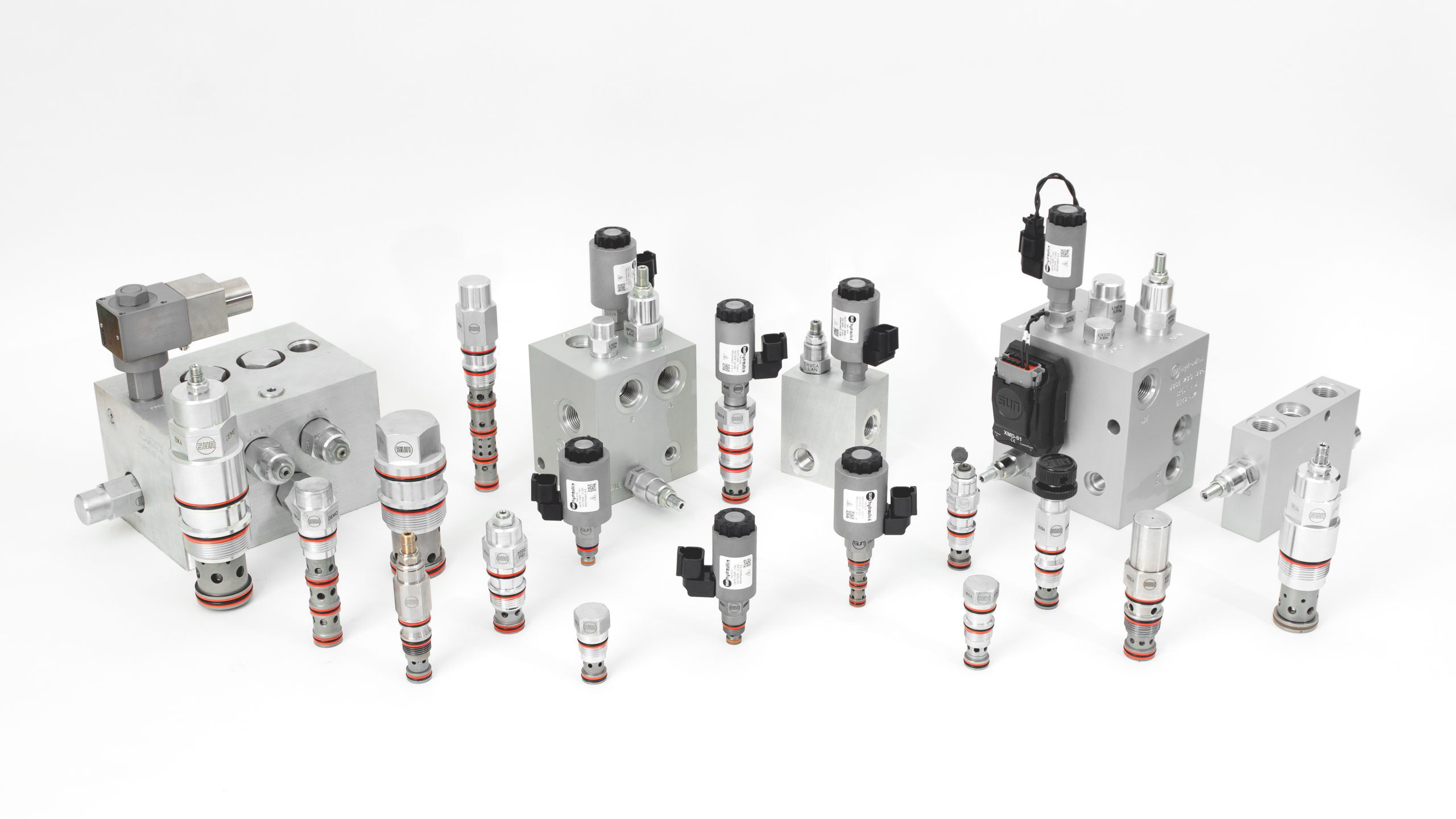
Most flow control valves from Sun Hydraulics are available as corrosion resistant. Stainless steel cartridge valves are the optimal choice for corrosion-prone environments, such as marine applications, where the risk of rust and material degradation is high. The valves are available either in stainless steel or in standard steel with a zinc-nickel surface treatment that provides effective corrosion protection. SUN Hydraulics stainless steel valves have been salt spray tested for a minimum of 1,000 hours in accordance with quality standards ASTM B117-03 and ISO 9227.
2 ports, fixed orifice, pressure compensated
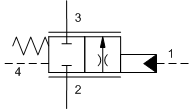
4 ports, normally closed proportional throttle pilot shift

2 ports, fully adjustable, needle valve

2 ports, fully adjustable, needle valve, with reverse flow check

2 ports, fixed orifice, non-compensated, with reverse flow check
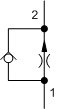
2 ports, fixed orifice, pressure compensated, with reverse flow check
4 ports, normally closed, dual path, proportional throttle

3 ports, flow divider, high accuracy

3 ports, flow divider/combiner
3 ports, flow divider/combiner, high accuracy
3 ports, flow divider/combiner, high capacity
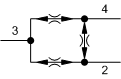
3 ports, flow divider/combiner, synchronizing
3 ports, flow divider/combiner, synchronizing, high accuracy
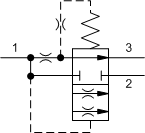
3 ports, fixed orifice, bypass/restricted
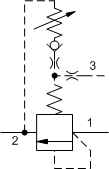
3 ports, normally closed modulating element valve with relief function
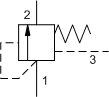
Normally closed, modulating
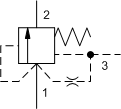
Normally closed, pilot source from port 1, modulating
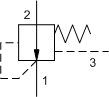
Normally open, modulating
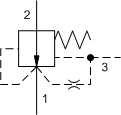
Normally open, pilot source from port 1, modulating
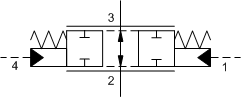
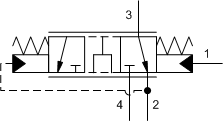
Bypass/Restrictive, modulating
A flow control valve (also known as a flow regulating valve) is a common component in hydraulic systems and is used to regulate or restrict the flow rate of fluid. The valve does not directly affect the pressure, but instead controls how quickly a function is performed—for example, how fast a cylinder moves or how quickly a hydraulic motor rotates. Flow control valves are used to manage the flow in one or more functions, for instance by restricting flow, distributing it to multiple functions or prioritizing flow to a specific function.
Flow control valves have a wide range of applications and are found in everything from industrial machinery to mobile work vehicles. They are used to control the speed of cylinders, motors, or other hydraulic functions, making them essential for ensuring precision, safety, and efficiency in various types of systems. For example, they can limit speed by restricting flow to a function, distribute flow between multiple functions, or prioritize flow to a specific function in systems where resources are limited.
Proportional flow control valves are operated by an electrical signal and allow for precise, stepless regulation of flow, providing a higher degree of control and accuracy. The valve opens only to the extent corresponding to the level of the control signal. On/off flow control valves, on the other hand, are either fully open or fully closed. These are suitable for simpler applications where exact flow regulation is not required.
Flow control valves can also serve as overload protection in a system. If the flow becomes too high, the valve can automatically reduce it to protect other components from damage due to excessive load or pressure. Additionally, these valves can contribute to energy savings by reducing unnecessary flow, thereby lowering the system’s overall energy consumption.



Hydnet
EA Rosengrens gata 29
421 32 Västra Frölunda
+46 31 - 499 490
info@hydnet.se

