
Hydnet - the specialist in intelligent hydraulic systems
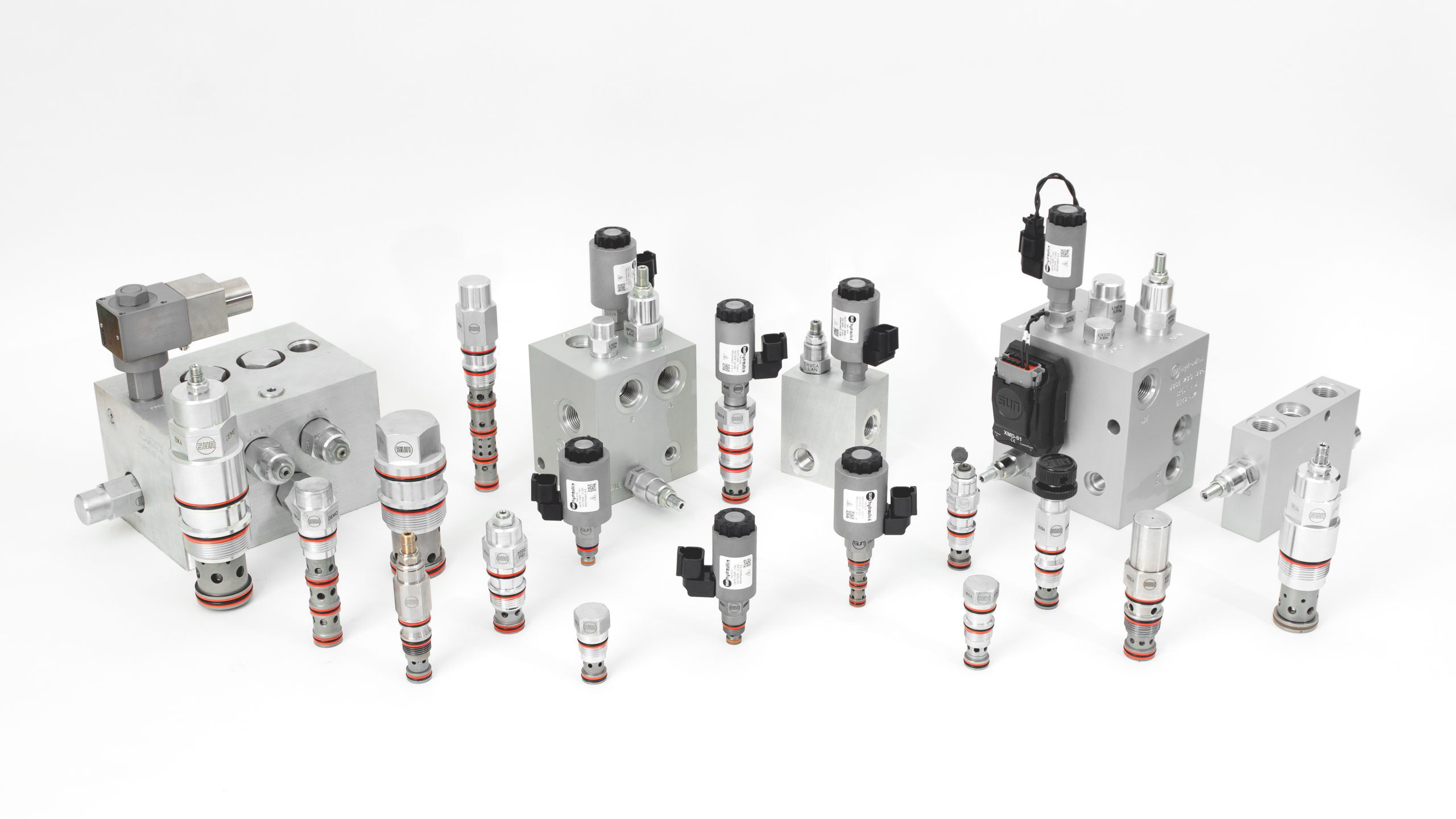
You find corrosion resistant directional valves in a large variety – check valves, logic elements, shuttle valves, selector valves and 2-, 3-, 4-, and 6-way directional valves. Stainless steel cartridge valves are the optimal choice for corrosion-prone environments, such as marine applications, where the risk of rust and material degradation is high. The valves are available either in stainless steel or in standard steel with a zinc-nickel surface treatment that provides effective corrosion protection. SUN Hydraulics stainless steel valves have been salt spray tested for a minimum of 1,000 hours in accordance with quality standards ASTM B117-03 and ISO 9227.
2 ports, free flow nose to side
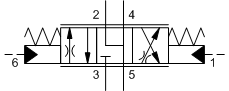
4 ports, 3 position, pilot operated, proportional valve
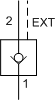
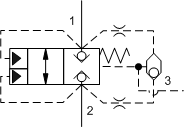
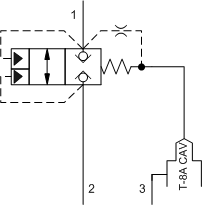
2 ports, free flow nose to side check with auxillary external port

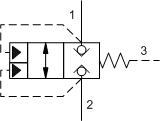
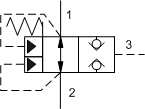
3 ports, free flow nose to side, port 3 blocked

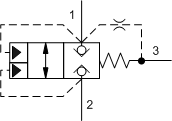
3 ports, free flow side to nose, port 3 blocked

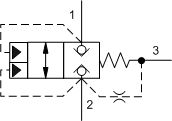
3 ports, bypass orifice, free flow side to nose, port 3 blocked
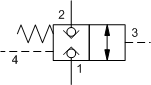
Normally closed, direct operated, balanced poppet
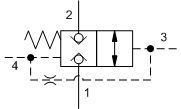
Normally closed, vent to operate, balanced poppet
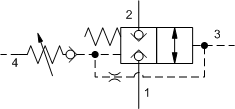
Normally closed, pressure adjustable, balanced poppet
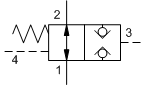
Normally open, directly operated, balanced poppet
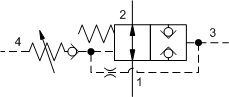
Normally open, pressure adjustable, balanced poppet
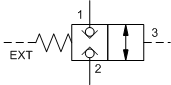
3 ports, normally closed, direct operated, balanced poppet
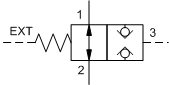
3 ports, normally open, direct operated, balanced poppet
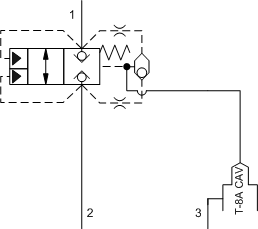
Vent-to-open, spring biased closed, with pilot source from port 1 or 2 and integral pilot control cavity, unbalanced poppet
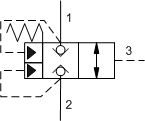
Pilot-to-open, spring biased closed, unbalanced poppet
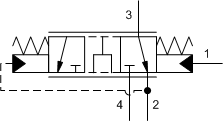
Bypass/Restrictive, modulating

Single ball, signal external, 2 ports

Single ball, signal at port 2, 2 ports


Single ball, signal at port 3, 3 ports

Single ball, signal at port 2, 3 ports


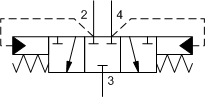
Low side (hot oil), 3 position, 4 ports
Low side (hot oil), delay shift, 3 position, 4 ports
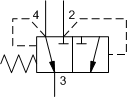
High side, spring offset, 4 ports
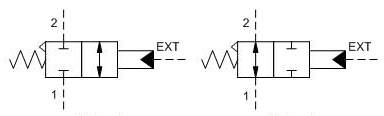
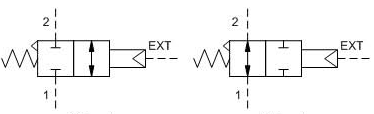
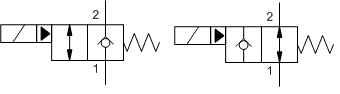
2-way, flow 1 to 2, poppet with 2-stage solenoid operated. Please note that these valves are no longer available. DFCA is replaced by DFCI. DFDA by DFDI. DFEA by DFEI. DFFA by DFFI. For more information, please contact one of our sales engineers.
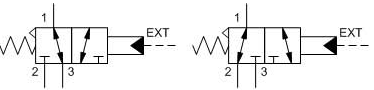
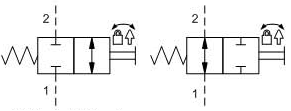
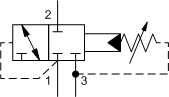
3 ports, pilot operated, normally closed, 2-way
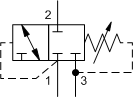
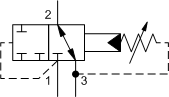
4 ports, pilot operated, normally open, 2-way
3 ports, pilot operated, normally open, 2-way
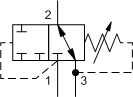
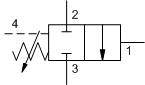
4 ports, direct acting, sealed pilot, normally closed, 2-way
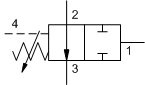
4 ports, direct acting, sealed pilot, normally open, 2-way
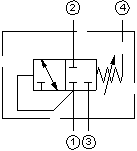
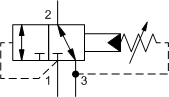
3 ports, port 2 to 3 open, port 1 blocked, pilot operated, 3-way
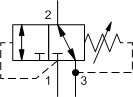
3 ports, port 2 to 3 open, port 1 blocked, direct acting, 3-way
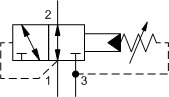
3 ports, port 1 to 2 open, port 3 blocked, pilot operated, 3-way
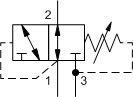
3 ports, port 1 to 2 open, port 3 blocked, direct acting, 3-way
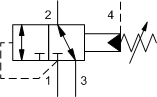
4 ports, port 2 to 3 open, port 1 blocked, pilot operated, 3-way
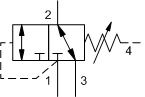
4 ports, port 2 to 3 open, port 1 blocked, direct acting, 3-way
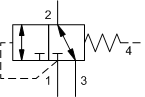
4 ports, port 2 to 3 open, port 1 blocked, direct acting, fixed setting, 3-way
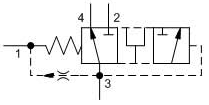
3 way, Vent to shift, normally open diverter
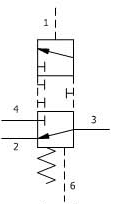
3 way, 2 position, pilot to shift
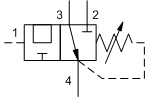
4 ports, port 3 to 4 open, port 2 blocked, direct acting, 3-way
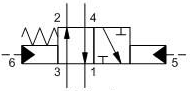
4 way, 2 position, pilot operated
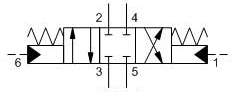
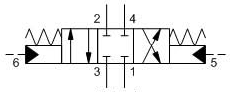
4 way, 3 position, pilot operated
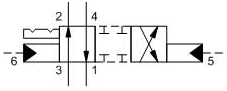
4 way, 2 position, detented, pilot operated
Directional valves are used to control the flow of hydraulic oil in a system, either through electric actuation (such as a solenoid valve), manual operation or pressure changes. The valve determines the path the fluid should take – for example, whether it should be directed to a cylinder to extend it, or to another port to retract it. Its primary function is to start or stop the flow, or to switch the flow between different functions.
Check valves are common in hydraulic systems and allow flow in one direction while blocking it in the opposite. They are used to prevent reverse flow, protect pumps, or maintain pressure in certain parts of the system.
Logic elements are hydraulic valves controlled by one or more pressure signals, based on logical principles—similar to electronic logic gates. They are used to create advanced control functions without electronics, making them robust and reliable even in demanding environments.
Shuttle valves are controlled by pressure differences within the hydraulic system. The valve has two separate inlets and one common outlet, and it automatically connects one of the inlets to the outlet — depending on which has the higher pressure. This means the valve allows flow from two different pressure sources, but only the one with the higher pressure is passed through to the outlet.
Directional valves come in a variety of configurations, including 2-, 3-, 4-, and 6-way versions. As the names suggest, the number refers to how many ports the valve has for controlling flow. These range from the simpler 2-way valve, which only provides an open/close function, to the more advanced 6-way valve, capable of managing complex flow control.
A selector valve is used to switch between two or more functions using a common control signal or actuator. It is typically used when multiple functions need to be operated from the same directional valve — but only one function at a time.



Hydnet
EA Rosengrens gata 29
421 32 Västra Frölunda
+46 31 - 499 490
info@hydnet.se